What Modularity Really Means
The interface logic that offsite still lacks.
In From ETO to CTO, we argued that construction must move from bespoke project delivery toward a Configure-to-Order (CTO) marketplace. This essay asks a simpler question: what kind of modularity makes that shift possible?
In everyday language, “modular” often suggests flexibility, efficiency, or ease of assembly. But in systems theory, the word has a more precise meaning.
A modular system is divided into distinct components. Each component has its own internal logic, but the system still works as a whole because the parts follow shared interface rules. These rules specify how parts connect (physically, digitally, or procedurally) so that each can be developed independently while still functioning within a larger whole.
What makes modularity powerful is not the existence of parts alone, but the interfaces that coordinate them. A well-structured interface allows each module to be developed more independently. That makes parallel innovation, specialization, and substitution possible.
Parallel innovation is what allowed the computing industry to scale so rapidly in the 1980s and 1990s. Once IBM published stable specifications for internal buses and peripheral slots, third-party firms could develop CPUs, memory chips, and software without renegotiating every connection. The result was not just better components, but a product ecosystem.
Automotive platforms, aircraft assemblies, and camera systems followed the same pattern. In every case, modules existed before modularity did. Modularity emerged only when interfaces stabilized.
This distinction matters in architecture, engineering, and construction. In AEC, ‘modular’ still often means only that volumetric components are fabricated offsite. Modules are shipped to site, and projects are described as modular because they contain larger factory-made parts. But that is not yet modularity in the stronger (systemic) sense. Without shared interfaces, these products remain trapped inside firm-specific systems and project-specific coordination.
That mistake has carried real consequences. A major commonality among failed modular firms (including Katerra, Crate, and Hegg) is that each tried to control its own interface standard. The result was dependence on narrow supplier networks, brittle coordination chains, and limited interoperability. Neglecting interfaces is not just a technical oversight. It is a strategic vulnerability.
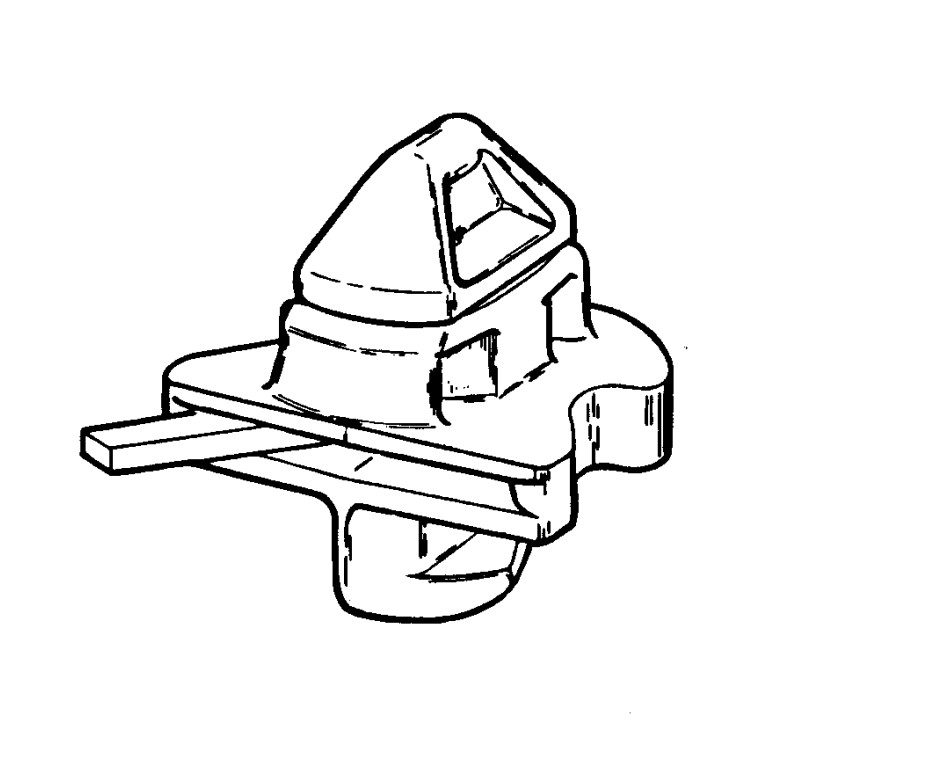
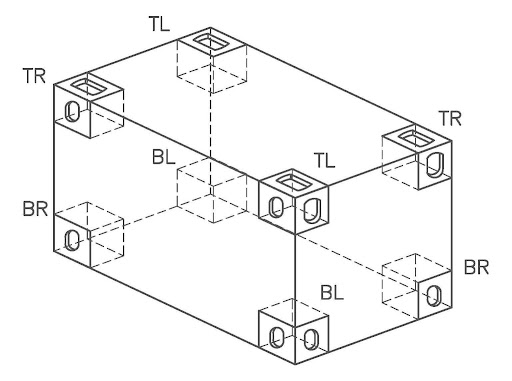


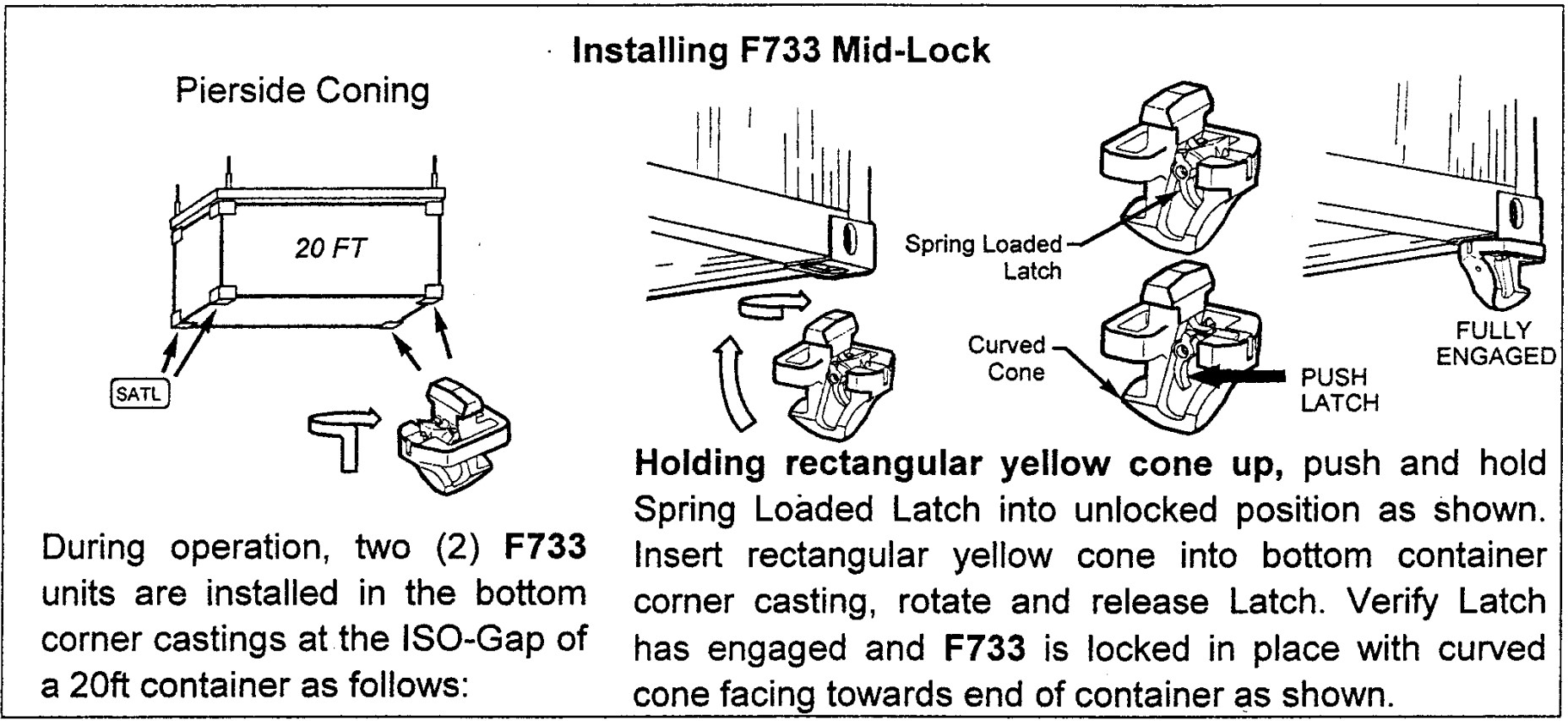
Image Credit(s): Peck & Hale 1996 catalog of ISO 1161 compliant shipping container twist lock mechanisms.
Without shared interface standards (that is, without collaborative design rules) these products remain bespoke. Each mod or pod must be re-detailed, coordinated, inspected, and approved for every new project. Risk accumulates in the seams. Transaction costs rise. Innovation stalls because nothing repeats cleanly.
This is not an accident. It is the predictable outcome of an industry that ships modules without shared interfaces. Until AEC adopts common physical, digital, and regulatory couplings, offsite construction will remain locked in an Engineer-to-Order (ETO) mindset.
Interfaces transform isolated products into a marketplace because they make interoperability1possible,2. That allows multiple suppliers to compete and collaborate without custom negotiation for every transaction. In industries from electronics to logistics, stable interface specifications have enabled buyers to mix and match components from different vendors, confident that they will connect and perform as expected. This predictability reduces technical risk and market friction. It allows specialized producers to focus on what they do best while integrators assemble complete systems from a broader, more competitive field. Without such interoperability, there is no true market, only a series of one-off, closed supply chains.
This is why the CfOC has focused its early efforts on writing the interface standards that offsite construction has long needed. Through our partnership with the International Code Council and ANSI accreditation, we are defining open-standard design rules for modular buildings: where value is exchanged, where scope is handed off, and where modules connect. Our goal is not just better products, but an open architecture others can build upon.
To learn more about how the CfOC is treating modularity not as a loose style of project delivery, but as a system of defined interfaces that lets many actors coordinate and improve:
- To see how we’re completing the modular functions between pods and base buildings, see the CfOC-ICC-1220 standard we’re developing at “Modular Interoperability & Interface Standard.”
- To see why interface standards matter only as part of a larger shift away from bespoke delivery, read “From ETO to CTO.”
- To see how interface rules eventually become repeatable choices inside a real product marketplace, explore the Configurator File Type project and the ”Designing the Rule Layer” whitepaper
- “Interoperability is a characteristic of a product or system to work with other products or systems.” (Wikipedia). See interfaces enabling interoperability in e commerce, data management, weaponry, etc. ↩︎
- Baldwin & Clark Design Rules: Volume 2 — How Technology Shapes Organizations (2023) Chapter 13. Cambridge, MA: MIT Press, p. 474.“Well-specified interfaces make it possible for different actors to innovate independently, coordinating only through the shared interface definition. The result is an expansion of the space of possible designs that can be realized without centralized control.” ↩︎